Page 2 of 2
Posted: Thu Oct 27, 2011 1:45 pm
by artificer
I will always answer any post that puts forward the more complicated, or more difficult method of doing any task with the easier, or less complicated or safer way.
As always we agree on most everything....why you don't see me much as there is nothing to add but I thought the vaseline or petroleum jelly might alert some as to what they missed so they don't next time.
Posted: Thu Oct 27, 2011 8:57 pm
by Cacti_Ken
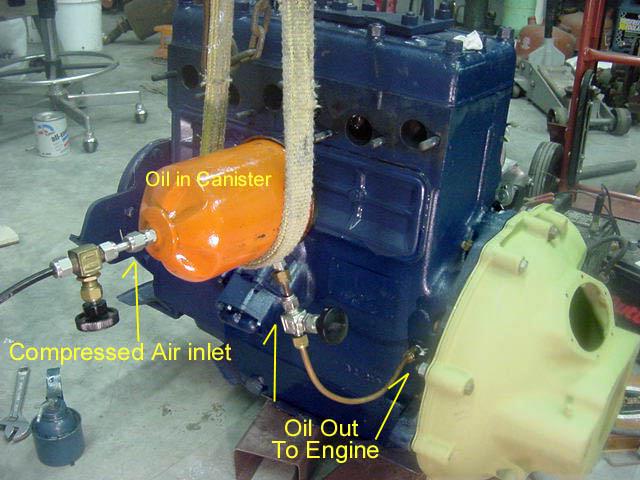
The way I pre-oiled. I didn't rebuild the engine myself, but had it done a few years prior to starting it up. I have rebuilt other engines and have used vaseline in the oil pump on assembly.
Posted: Fri Oct 28, 2011 7:45 am
by STXM38A1
Why is Vaseline the "goop" of choice for the oil pump? If there's been a liberal application of assembly lube and engine oil to the internals before it's closed up, is vaseline still recommended in the oil pump and possibly other components?
What happens to the vaseline once the pump starts pumping?

Posted: Fri Oct 28, 2011 9:12 am
by wesk
In the case of the Willys L134 the manual writer's neglected to mention the packing of the oil pump with anything but then one should always assume that a factory manual is meant to be used by a factory trained technician who should be aware of all these fine little points. Some manuals take the time and page space to offer these little tidbits of info up and some don't. The Chilton CJ manual doesn't address the issue of priming the oil pump or engine but the Moses Ludel book does. This is why an untrained rooky should read as much as he/she can about the subject task they are intending to undertake. This reading can be restoration guides written by those who have been down that same trail to training and instructional volumes for formal schooling of the trades.
Why vasoline? Well a lot of folks like it because it is a quite clean and harmless petroleum based lubricant that will dissolve and vanish in the system after start up. Assembly lube are usually the same safe lubricants to use. It's a personal thing or choice. If you have wonderful experiences with vasoline and enjoy it's texture, smell and feel then by all means use it.

Posted: Fri Oct 28, 2011 9:20 am
by RICKG
I'm glad i asked the initial question..With all the experienced
feedback available on this forum, how can a guy NOT go down
the right road??
Posted: Fri Oct 28, 2011 9:29 am
by STXM38A1
If you have wonderful experiences with vasoline and enjoy it's texture, smell and feel then by all means use it.
Roger, but what's that got to do with engine repair?
Posted: Sat Dec 03, 2011 10:59 am
by RICKG
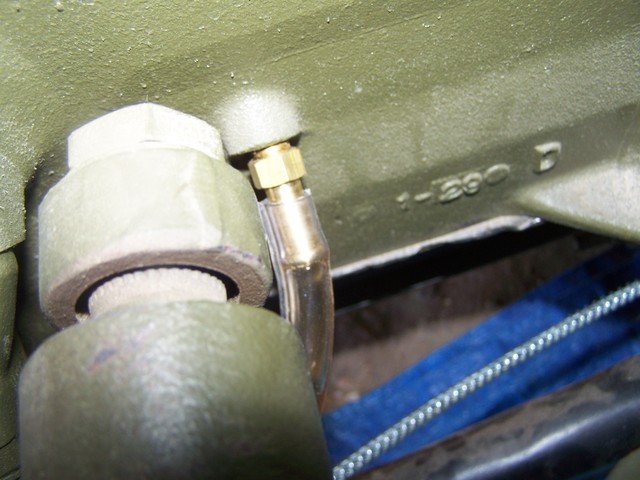
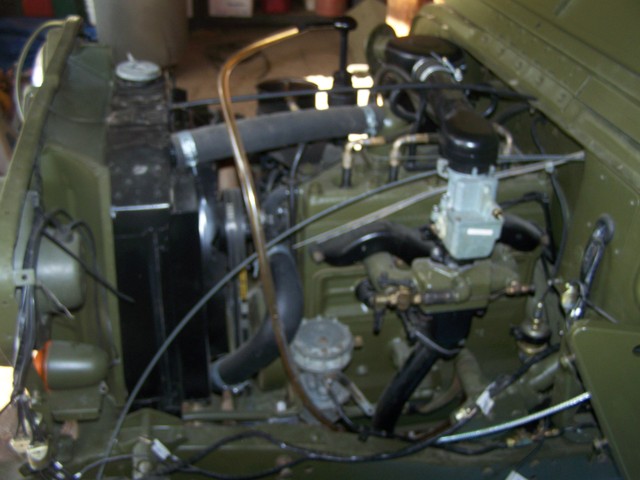
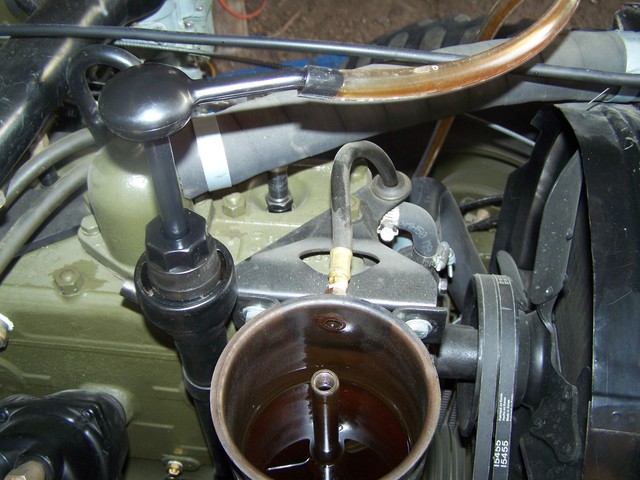
Here's my remedy as hi-tech as it is..
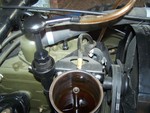
A small fluid pump as typically used for quart and gallon bottles
with a pick-up tube to the oilpan, the flow tube to the rearmost
plug in the galley. (Would have had better flow had i not waited till
20 deg weather)...After getting flow to the empty oil filter canister
i buttoned up the canister and pumped some more. Took about an
hour and 8 bucks..
Posted: Sat Dec 03, 2011 12:02 pm
by STXM38A1
That's purdy slick! (pun intended).
Thanks for posting.
Posted: Sat Dec 03, 2011 3:54 pm
by vrod02
I'm in the same boat 2yr old engine rebuild that has never been fired. I did remove the oil fill tube and over filled the engine to pickle the oil pump.Obviously I will drain excess. I also left the head loose to find top dead center, peek hole on bell housing sucks!:} since the head is off would pouring oil down the block passages to lube the valve train be a good idea?
Posted: Sat Dec 03, 2011 7:57 pm
by wesk
I also left the head loose to find top dead center, peek hole on bell housing sucks!:
Why not install the bolt on pointer on the timing cover and while the head's off you ca accurately find TDC with a dial indicator and make a small notch in the crank pulley. Then you would be eternally free of that ridiculous little window next to the starter!