Page 1 of 1
F134 oil pressure numbers?
Posted: Tue May 26, 2020 8:14 pm
by Hank44
I've been running my M38a1 with it's freshly rebuilt F134 Hurricane for a few months now going through the 500 mile break-in period that the engine builder specified. My question is what oil pressure should I expect to see on the gauge both at idle and at cruising RPM in third gear?
My gauge seems to sit pretty constant between about 25 and 30 pounds all the time. It will drop a bit closer to the 25 mark when the engine is hot, but RPM does not seem to change things one way or the other.
Does this seem like the way it should be?
Posted: Tue May 26, 2020 9:48 pm
by wesk
It can be tough to give an opinion on gauge readings without knowing a bit more about the gauge. IE Stock 24V 0-120 Lb gauge or 0-60 Lb gauge or perhaps another aftermarket type? Did you not use a simple direct reading gauge on initial runups? This would give you some sense of the accuracy of your electric gauge.
If your readings are accurate then they are about average for about half the rebuilt L & F 134's. The majority of overhauls today seem to be focused on bores, pistons, rings and standard bearings. Very few rebuilders today bother to clearance check piston fits, plastic-gauge bearing clearances, clearance check cam journals or lifter bores. Oil pumps are seldom checked for proper clearances. All of these must be done and done well to get consistent 40-55 PSI oil readings.
Posted: Wed May 27, 2020 2:28 am
by Hank44
Sorry.....I guess I should have said that it was still 24 volt with the stock 0-60 psi gauge. I tend to take that stuff for granted I guess.
The engine was rebuilt by a very popular local machine shop. They did the initial start-up and run-in. Given back to me, I was told to put about 500 miles on it before bringing it back to them for an oil change and inspection.
Honestly, I have found a few things in question with the way that the install was performed. At this point, I'm trying to lay down some facts and answer some questions before I either go back to them an argue that they be corrected, or find someplace more competent to get the rig squared away.
I do not have a mechanical gauge to test the factory one against. I believe the one that is in the dash reads correctly, but yes...I should verify that.
I'd be really interested in anyone could recommend a quality repair facility in the San Francisco Bay area of California that is familiar with military vehicles. These guys that did the work are supposedly a reputable machine shop, but it has became very clear that these kind of vehicles are not their thing....
Thanks
Posted: Wed May 27, 2020 9:05 am
by wesk
Have you confirmed your 60 PSI range gauge has the correct 60 PSI range sender and not the 0-120 PSI sender?
The only real method of determining the accuracy of an electrical operated gauge using a sender is to substitute a mechanical gauge. It is a very simple thing to do and the gauges are very inexpensive. In fact it is also a good idea to keep a mechanical water temp gauge in your tool kit as well. Having physical proof that your gauge readings are accurate is much better then having unfounded faith in your gauge's readings.

As reasonable as $59.95 for the pair
https://sinisterdiesel.com/i-16542399-a ... cAEALw_wcB
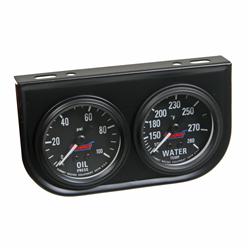
as cheap as $20.99
https://www.summitracing.com/parts/sum- ... q8EALw_wcB
Posted: Thu May 28, 2020 6:36 pm
by dpcd67
Very few rebuilders check the piston fit, bearing clearances etc???
Give me the name of your machine shop so I make sure never to use him.
I use Abrahams, the best old time automotive machine shop in the world, and yes, guys ship engines to them. I saw a 12 cylinder flat head from a Packard there from New Zealand; a monster complicated flat head.
As for oil pressure, yours is typical for used stock oil pumps; Mellings will do 60 easily.