Page 1 of 2
F-134 Ring Gap
Posted: Mon Oct 19, 2009 5:33 am
by Sadler5
Should I expect excessive smoke from new rings if the ring gap is .070? I mean should it smoke slightly or drink oil?
Thanks,
Posted: Mon Oct 19, 2009 7:16 am
by GPA
What is the reason for the excessive gaps? These are new rings? Maybe wrong size fitted? Give us some more info.
Posted: Mon Oct 19, 2009 7:28 am
by Sadler5
The engine has .040 pistons in it. I ordered .040 rings and they are the correct rings but they have an end gap of .070. Obviously it needs bored more but I want to know what I can get by with.
Thanks,
Posted: Mon Oct 19, 2009 8:01 am
by wesk
What you can expect to get by with are the specs in the book or with the supplier's instruction sheets if they differ from the book. Too tight and you risk seizing and broken ring lands on your new pistons. Too loose and you risk broken rings and broken ring lands on your new pistons. Either way you risk scarring damage to your cylinders as well. Do it right the first time. It is always cheaper that way.

Posted: Mon Oct 19, 2009 9:19 am
by Sadler5
Thanks Wes, of course your are right. Here is my dilemma; I have this F-134 that was locked up due to water in the cylinder. I know nothing about it and have no way of finding out, however I started spec-ing it out and found everything to be ok but the ring gap. I wanted to hear it run and get some confidence in everything else such as oil pump, fuel pump and just the general operation of the engine so I ordered the rings that were in it previously and cleaned up the cylinder walls and all that I could do. After I better understand what I have I thought I would tear it back down and go the new piston and ring with boring it out. I had hoped to run it this winter some and work on my spare engine (L-134) and swap it out next summer and do the work on the F-134 with the bore and piston work......but it smokes very bad and I wanted some of this web site's experience to tell me if I should expect this or if I had bigger problems. I am currently running 10w30 oil in it.
Thanks for your help on this and GPA and others also.
Posted: Mon Oct 19, 2009 11:01 pm
by wesk
The risks I listed above are real. Only you can make the final call. One thing that will help cut down on the blue smoke is straight 30 or 40 weight oil.
Posted: Tue Oct 20, 2009 12:49 am
by GPA
Hello Sadler,
You should think over this ring problem again on your F-134 before you run the engine. If the ring gaps are that large, you may have the wrong rings for the size of the bore. For ring gaps, you can follow Willys specs, the ring manufacturer's specs or SAE specs. People make the mistake of checking only the ring gap in a "re ring" job or if they reuse their old pistons. There are other checks to be made. Ring to ring groove clearance is one of them. I have three engines in my shop with ring related problems. 1. Porsche 911S engine rebuilt recently by a shop specialized on classics. Second compression rings broken on all six pistons. Reason: ring grooves worn. 2. M606A2, F-134 using 4 ring type pistons like some diesels. All! the rings on all four! pistons broken into pieces. 3.And my own M38A1 (Army rebuild tag from 1978, but who knows who did what and when) top compression ring broken, on all four, ring grooves worn again. So you better rebuild it properly, winter is coming anyway. Good luck.
Posted: Tue Oct 20, 2009 8:34 am
by Sadler5
Thanks for your information. I have to rely on this web site's vast information and experience. Those of you who have seen dozens of these engines and overcome basic problems as your normal routine are to be admired. On the other hand I may only see one of these engines in my life. That goes towards Wes' comment in doing it right the first time. I do, as I said need to gain confidence in this engine as it is already bored .40 over.
I am especially curious about the 4 grove pistons you are talking about. I may be in a pickle on this engine. As I said it was locked up and I unstuck the piston that had water in it. I then cleaned all cylinder walls and honed as needed. I cleaned the pistons as well. They had 4 groves with rings on 3. I replaced the rings as they were originally installed with new ones. Do you think this was wrong to begin with? I have never seen 4 ring groove sets. Per pictures of pistons I left the top ring unpopulated as I found it and only replaced rings as they were previously installed. This is how the rebuild information that I researched said to do it.
Could you shed more light on the different types of pistons?
Thanks,
Posted: Tue Oct 20, 2009 8:45 am
by wesk
The unused groove is a heat dam groove and gets no ring. It's function is to help prevent the carbon buildup between the top ring and it's groove. The two piston styles I have used are both 3 ring pistons , one with the 4th heat dam groove and one without.
Posted: Tue Oct 20, 2009 9:04 am
by GPA
I know about the heat groove but I am not talking about that. I can't post a picture here, but I will send Wes a picture about the piston with 4 rings, as I've said it looks like a diesel style. The fourth ring is at the bottom of the skirt. I have to look for the piston to take a picture.
Zoli
Posted: Tue Oct 20, 2009 9:26 am
by GPA
I have found it, pictures went to Wes.
Posted: Tue Oct 20, 2009 9:35 am
by Sadler5
Thanks
Posted: Tue Oct 20, 2009 10:04 am
by wesk
Yes I have seen them before. Not Willys but aftermarket I believe, Many aircraft pistons have a skirt ring also.
Zoli,
You have a photo album on our web site. You can post your photo there and then link to it from here.
http://www.willysmjeeps.com/v2/modules. ... _album.php
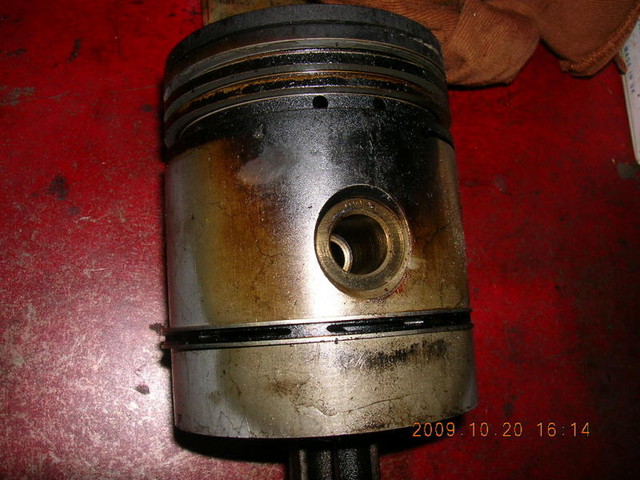
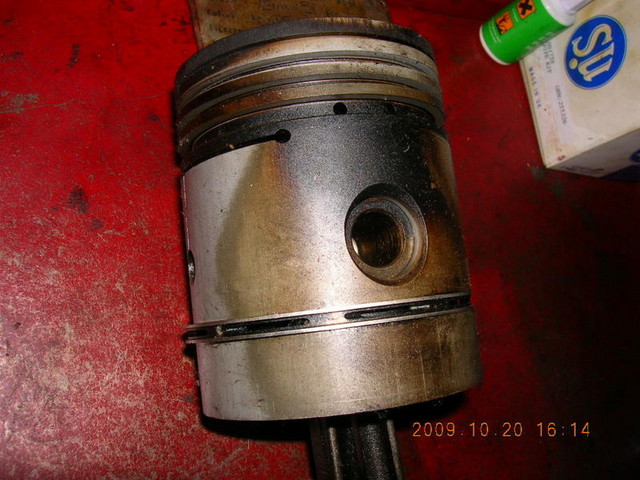
F-134 Ring Gap - Oil in intake
Posted: Sun Oct 25, 2009 6:58 am
by Sadler5
There is more to my dilemma that has me baffled. I investigated further on my oil smoke and consumption problem. On this engine which I have previously described in this thread as re-ringed and valved which now has extreme smoke and oil consumption. I thought my valve seals were not installed correctly which I found after reading that they were not. I removed the springs with a tool that does not require removing the head. That worked out ok. I then started the engine and found the smoke was still there. This smoke is so bad it is embarrassing. It is so bad I thought I may have a hole in a piston. I then removed the head thinking that the problem would then be obvious. It was not. I looked at the intake valves and they all had oil in them as did the tops of the cylinders when I removed the head. It is like something is leaking down through the top into the intake. I inspected the top but do not see how it can get down there. What should I look for? How can this much oil get into the intake on every valve thus leak into the top of the cylinders?
Posted: Sun Oct 25, 2009 11:21 am
by wesk
When that intake valve opens the piston which is on it's way down will suck plenty of oil past a worn intake valve guide with or without the seals. Now that you have the head off remove the intake valve springs and check each valve for fit in it's guide. Use the book.